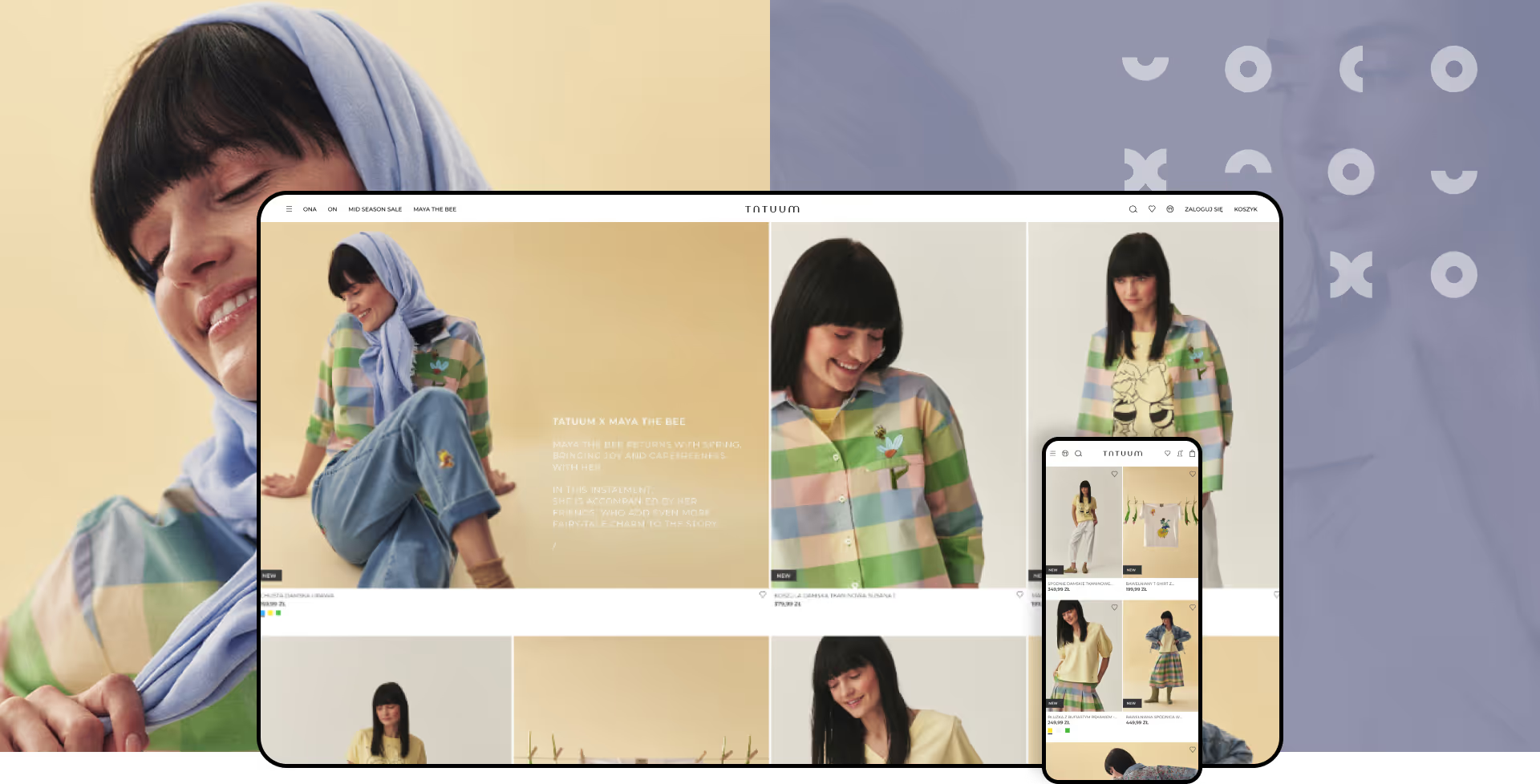
Tatuum - Redesign of the e-commerce architecture on Magento using Ergonode PIM
About
The goal of the project was to build an e-commerce architecture ready for further international expansion, unify product data management, and ensure stable operation of key sales mechanisms, including an extensive loyalty program.
Challenge
Project context
Tatuum is a fashion brand operating in many international markets, with a mature business model encompassing both online and omnichannel sales (depending on the market). At the start of the project, the e-commerce platform was based on a custom-built engine that, in practice, could no longer meet the scale and operational complexity of the organization.
The goal of the project was to build an e-commerce architecture ready for further international expansion, unify product data management, and ensure stable operation of key sales mechanisms, including an extensive loyalty program.
Multi-market operations and diverse market presence models
The existing solution did not systematically support the requirements arising from expansion into over 20 markets: differences in currencies, pricing and promotional policies, delivery and payment methods, and local product variants. Some processes were implemented using “workarounds,” which increased operational costs and the risk of errors.
The scale of omnichannel
For Tatuum, omnichannel is not a conceptual design but a real, operational sales model. The brand combines e-commerce with an extensive network of brick-and-mortar stores, whose scale and distribution vary by market.
Poland remains the largest and most mature market - Tatuum has over 100 stores here, present in all major cities. Additionally, the brand is consistently building its brick-and-mortar presence in Central and Eastern Europe - in the Czech Republic and Hungary, the brand already has a significant network of stores in the largest commercial hubs. It is developing a smaller but stable presence in Slovakia and Romania.
Such a diverse scale of brick-and-mortar presence directly impacts the requirements for e-commerce, which must support various levels of channel integration while maintaining consistency in the customer experience and brand communication across all markets.
Inconsistent product information management
On the client side, an extensive ecosystem was already in place (ERP/WMS, a QC system at the PLM/PDM interface), but with a large number of markets, languages, attributes, and multimedia assets, there was no layer to organize and distribute product information to e-commerce in a controlled manner.
Unique offering: capsules instead of classic collections
Tatuum does not operate within the traditional fashion model based on SS/AW collections. The offering is built around capsules and micro-collections, introduced on a continuous basis. This means:
- high product turnover over time,
- the need for precise marketing communication,
- the need to control product exposure across various sales channels.
At the same time, part of the product range has a very long lifecycle. These products - often developed through successive iterations - build trust in the brand and genuine customer loyalty. E-commerce had to:
- enable the presentation of products in the context of capsule collections and styling,
- support the sale of evergreen products,
- not cannibalize offline sales,
- maintain consistency in quality and aesthetic communication.
Loyalty program and complex discount rules
A key element of the customer experience is a comprehensive loyalty program where users have multiple discount codes and expect transparent presentation of rules and the ability to combine codes in a single shopping cart. This required precise discount logic, margin control, and efficient integration with back-office systems.
ERP integrations with insufficient integration maturity
Integration with the ERP (WinCash) was a high-risk area: the documentation did not fully reflect the actual state of affairs, and numerous iterations and verifications were necessary. At the same time, the PIM implementation introduced an additional source of product data, which required a consistent design of data flows.
Solution
Strix’s approach
The project was preceded by an analytical phase, including a blueprint and a series of workshops. The goal was to:
- map the existing ecosystem,
- identify constraints and risks,
- design the target architecture and system responsibilities (source of truth),
- prepare a plan for controlled implementation for a multi-market organization.
Target solution
E-commerce platform: Magento + Hyvä
A solution was designed based on Magento as a flexible e-commerce engine, with a modern frontend layer. A headless approach was considered, but ultimately - due to project constraints - an architecture based on Magento and Hyvä was adopted.
Product data layer: Ergonode PIM
Ergonode PIM was implemented to serve as a bridge between the product world (QC/PLM/PDM) and e-commerce. PIM took over responsibility for, among other things:
- multilingualism and translations,
- attributes, multimedia, and categorization,
- consistent product content management,
- preparing data for market differences and product variants.
Multi-market support and localization
The architecture was designed to support multiple markets with local requirements: payment and delivery methods, differences in product offerings, prices, and promotions. Where it made business sense, omnichannel elements were incorporated (e.g., in-store availability).
Promotions and loyalty
The logic for presenting and calculating discounts was designed with an emphasis on:
- transparency of promotion rules for the user,
- support for multiple discount codes in a single shopping cart,
- consistency with pricing policy and margin protection,
- performance during intensive data exchange with back-office systems.
Checkout and Shopping Experience
A one-step checkout process and solutions supporting user convenience were implemented, despite the large number of combinations resulting from different markets, delivery methods, and payment options.

Results
The new e-commerce architecture was designed to match the scale and maturity of Tatuum’s business and to support multi-market sales and further international expansion - both online and through omnichannel models. This enables the company to expand into new markets without having to overhaul key system mechanisms.
The implementation of the PIM layer streamlined product information management by centralizing data, attributes, multimedia, and translations. This enabled consistent and scalable management of the product offering across multiple markets and product variants, reducing manual operations and the risk of data inconsistencies.
The architecture provided greater flexibility in handling capsules and micro-collections, enabling simultaneous support for seasonal sales, evergreen products, and marketing communications - without conflicting with the brick-and-mortar channel.
The e-commerce platform was designed to support a wide range of local and international payment and delivery methods, varying by market. This allows for flexible adaptation of logistics offerings to customer expectations in specific markets, while maintaining a consistent shopping experience and high system performance.
The new solution reliably supports a comprehensive loyalty program, including numerous active discount codes, their transparent display, and the ability to combine discounts in a single shopping cart. The promotion logic was designed to ensure consistency in rules, margin protection, and high performance even during periods of heavy traffic.
The designed architecture provides the flexibility necessary for the further development of the digital ecosystem, including the launch of a mobile app, the expansion of omnichannel scenarios, and the implementation of processes such as shipments from brick-and-mortar stores. This enables the gradual expansion of additional touchpoints with the brand in a consistent and controlled manner, in line with evolving business needs.
The system supports advanced pricing models, including market differences, pricing decisions for selected product groups, dynamic promotions, and combinations thereof. This enables precise management of prices and promotions across a large product range, while maintaining control over margins and consistency in price communication across all sales channels.
As a result of the implementation, reliance on temporary solutions - which previously compensated for technological gaps - was also significantly reduced. E-commerce ceased to be a bottleneck for the organization and became a tool that genuinely supports the brand’s strategy - based on product quality, attention to customer relationships, and long-term value creation.
Technology
This project is built with our technology partners:


